Bitcoin vs. Stocks: Why the Mathematics of Survival Changes Everything.
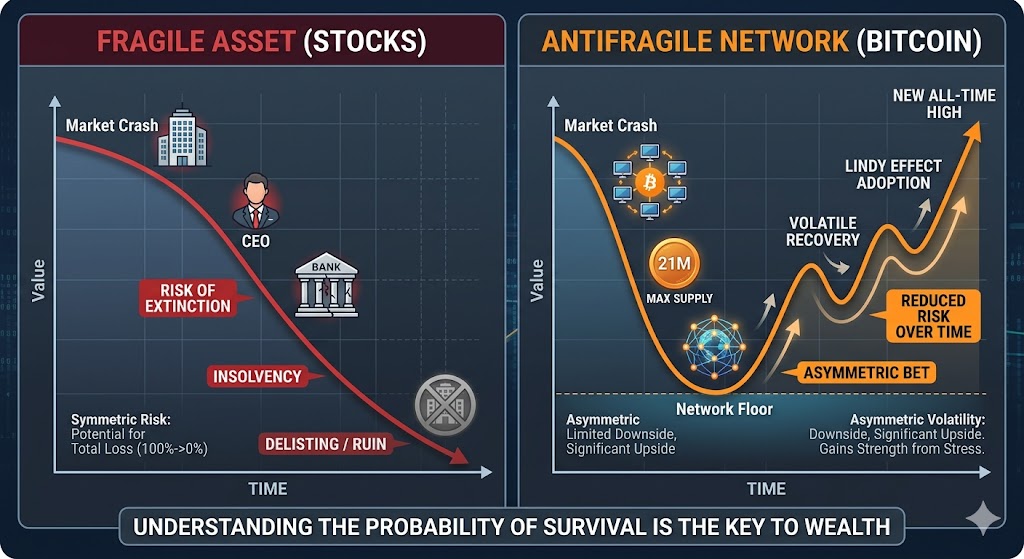
Most people trade based on "gut feeling." But if you don’t understand the fundamental difference between a stock market crash and a Bitcoin dip, you’re playing a dangerous game with probability.
Mathematically speaking, these two worlds follow entirely different laws. Here is why Bitcoin isn't just a "digital stock," but a completely new asset class built for indestructibility.
(Disclaimer: This is a mathematical analysis, not financial advice.)
The Biology of Markets: Why Corporations Die
If we plot the success of all companies on a chart, we don’t see a gentle rolling hill. We see a jagged mountain range with a single peak and a massive graveyard in the valley.
In statistics, we call this a Power Law distribution (or a Right-Skewed distribution):
- The Masses: The vast majority of companies struggle in the "Valley of Low Margins" just to stay afloat.
- The Outliers: A tiny handful of giants (like Apple or Amazon) dominate the top tier. Their success is disproportionate - almost unfairly lucrative.
- The Mortality Risk: Every company, no matter how large, is a biological organism. It has a head (CEO), a body (headquarters), and is vulnerable to "diseases" like mismanagement, regulation, or technological obsolescence.
The takeaway for shareholders: When a stock drops more than 50%, the death bells are ringing. At that point, the market is pricing in the very real risk of extinction.
Bitcoin: The Network That Cannot Die
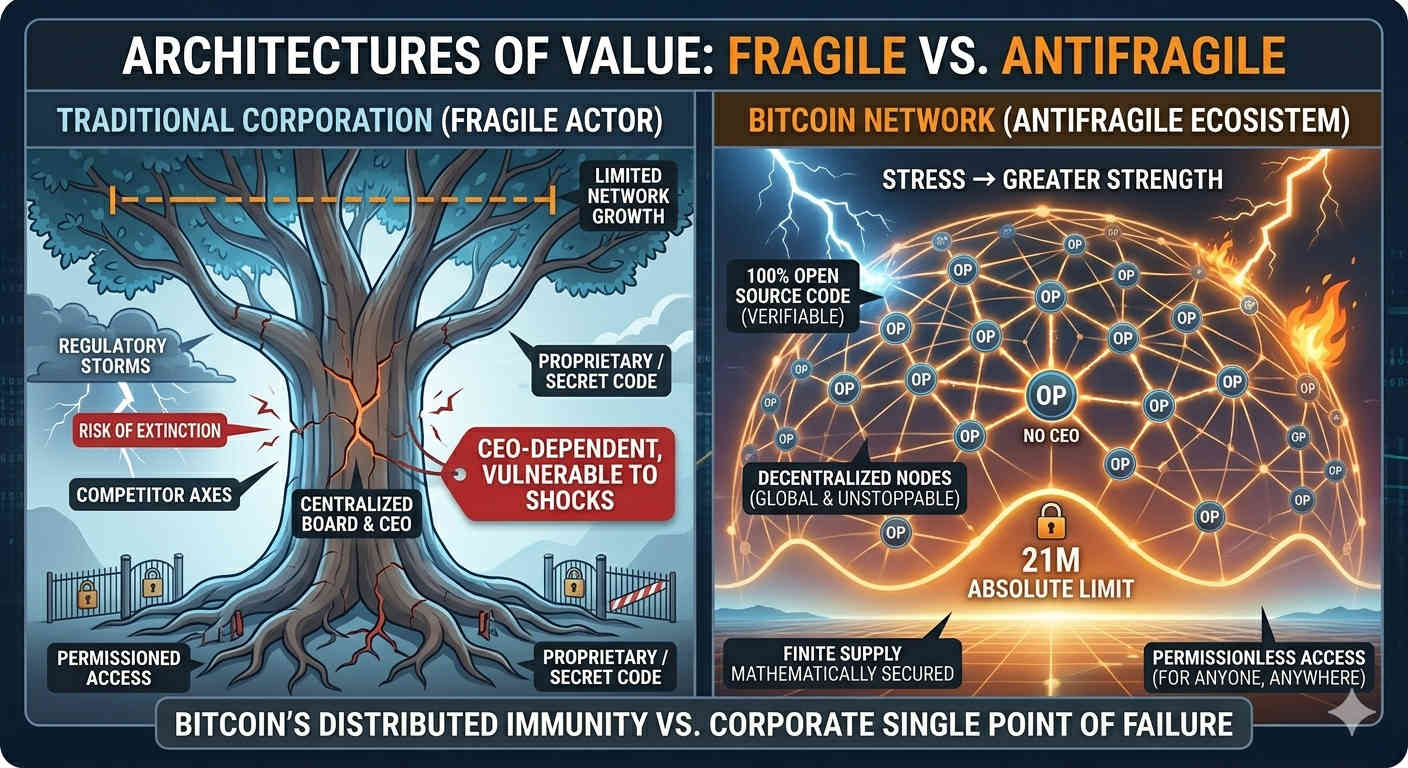
Bitcoin also follows a power-law distribution, its growth phases are extreme and rare. But that’s where the similarity ends. While a company is an actor, Bitcoin is an ecosystem.
Think of the difference like this: A company is like a majestic oak tree. It can grow tall, but a single strike to the trunk (regulation) or a severe drought (lack of capital) can topple it.
Bitcoin, however, is like a mycelium fungal network or the Internet itself:
- It has no trunk and no head.
- It is decentrally networked across the entire globe.
- It is a socio-technical network protected by mathematics, not quarterly earnings.
This makes Bitcoin antifragile. While stress weakens a company, stress often makes a decentralized network more famous and more robust.
The Psychology of the Crash: When is a Drop the End?
The mathematics of price drawdowns reveals the truth about risk.
The Stock Warning System (Linear Decay)
- -10% to -20%: Standard market noise.
- -30% to -50%: Red Alert. This usually indicates a broken business model. The probability of the company vanishing from the market (delisting) increases exponentially.
The Bitcoin Immune System (Asymmetric Volatility)
- -15% to -30%: Just another Tuesday in the crypto space.
- -50% to -80%: A historic buying window.
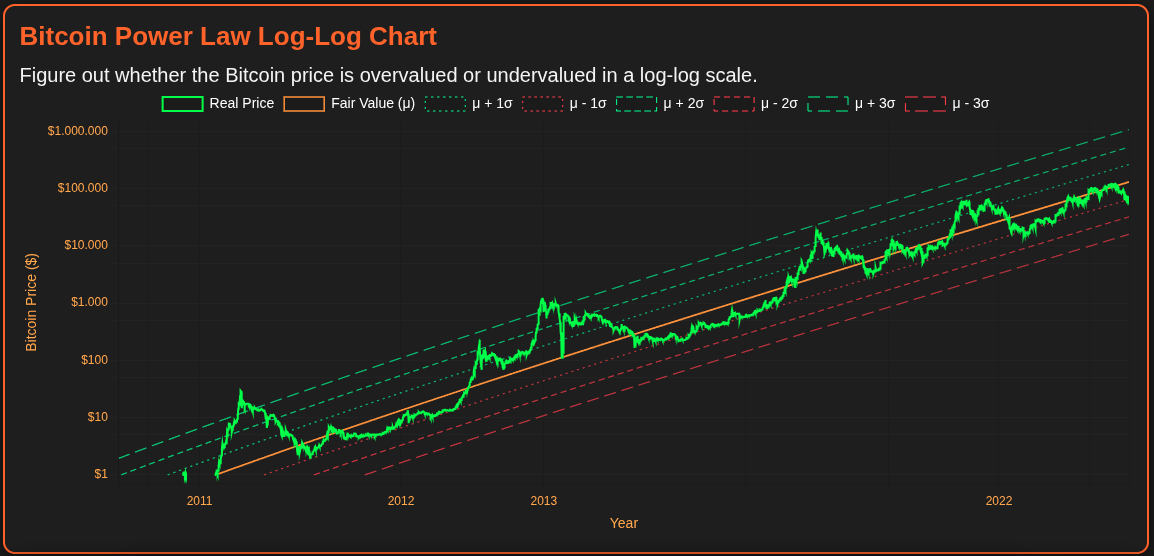
Why? Because Bitcoin’s rules (the 21-million cap, the 10-minute block time) are carved into the code. A price crash in Bitcoin isn’t "insolvency risk" - it’s a massive mispricing caused by panic. Since there is no central actor to go bankrupt, the mathematical "floor" of the distribution is secured by the global network.
Final Word: Why Time is Your Greatest Ally
For the long-term saver, Bitcoin shifts the probabilities in your favor.
Those who view Bitcoin as a mere trading tool fear the crash. Those who understand the mathematics of networks leverage its antifragility. Historically, time has defeated all volatility: With a long enough horizon, the risk of falling below your entry price trends toward zero, simply because the network continues to grow while the supply remains fixed.
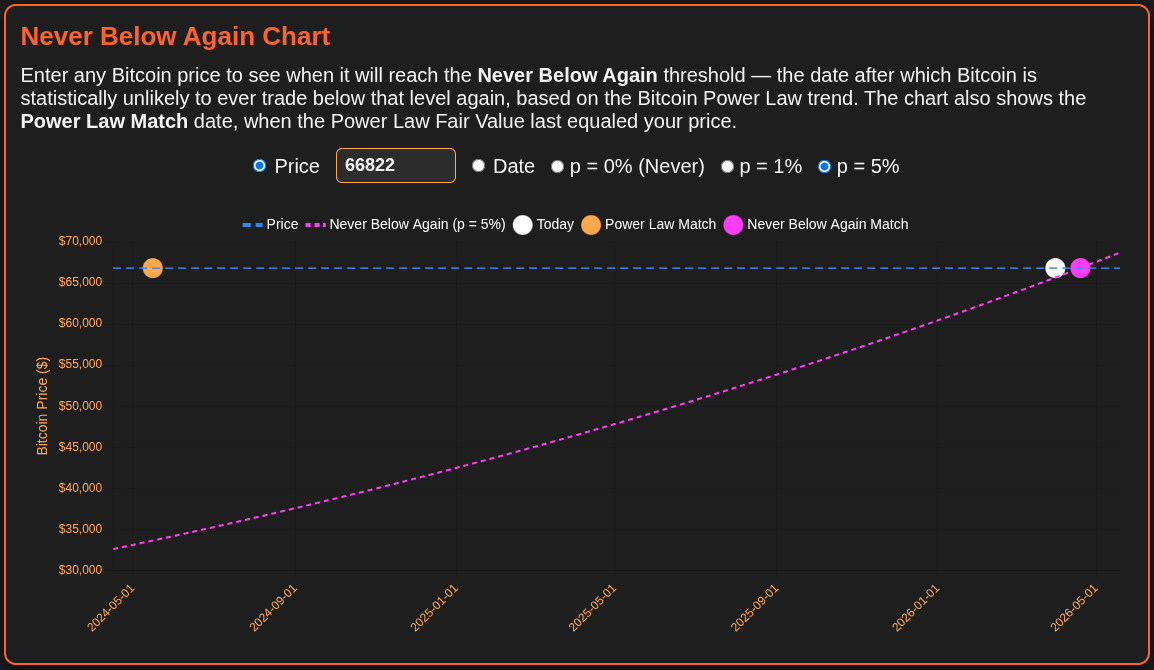
Bitcoin isn't a company you invest in. It's an indestructible protocol that you can use to save money or trade.
Theory is one thing. Your portfolio is another. How long would you survive a 50% drawdown?